Google is sending AI chips into space to test whether they can survive
Google is launching a test satellite into space. On board are Google’s own AI chips, known as TPUs.

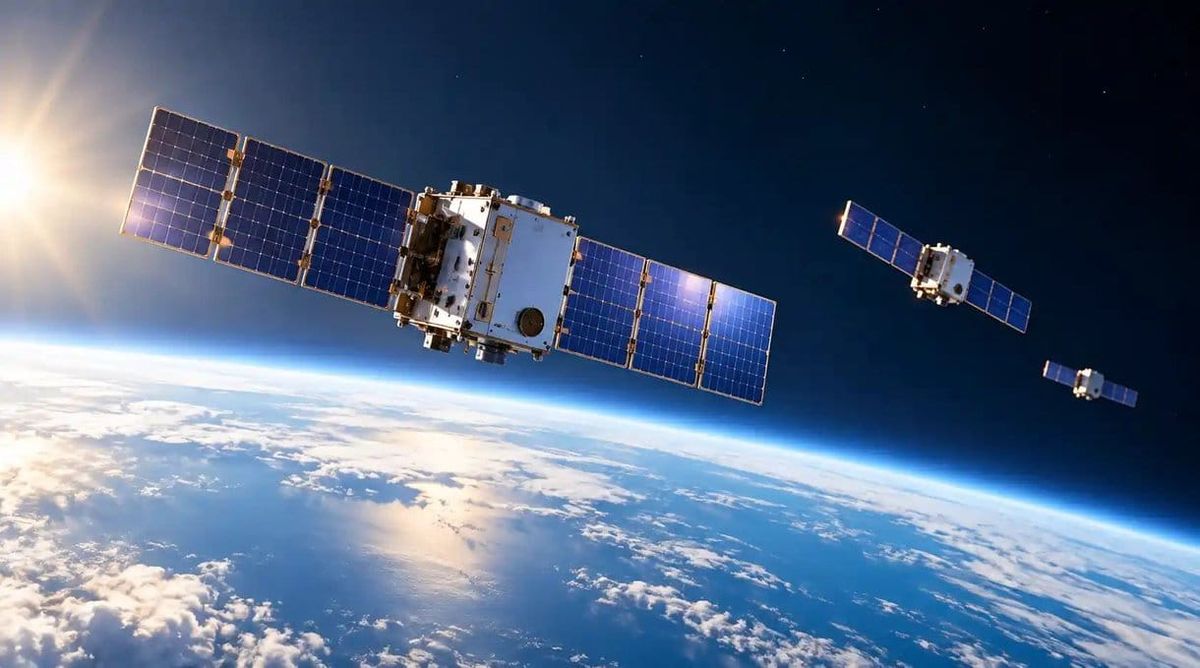
What caught my attention in this week’s news is electricity.
Elon Musk said in a lengthy interview with The Economist that AI development depends on chips and electricity. He is particularly interested in data centres in orbit, which can solve both energy and cooling issues. Meanwhile, Google is launching a test satellite equipped with its own AI chips. The project is called Suncatcher, and the rocket is being provided by SpaceX. So Musk is both the one talking about space as the solution and the one providing the transport.
I don’t think you should expect data centres in orbit just yet. Google’s satellite is merely testing whether a chip can survive the vibrations of launch and the radiation up there. There is neither a price nor a timetable for actual AI tasks. Musk is talking about an AI that will surpass the whole of humanity in five years, whilst Google is testing whether a chip can withstand a rocket. There’s a world of difference between the two.
But what these two stories reveal is worth noting. When some of the world’s richest companies are looking for power beyond the planet, energy has become a real bottleneck. Ultimately, this will be reflected in the price of the AI tools you use every day.
The interview with Musk also touches on how much power one man should have. We’ll come to that later on.
Enjoy reading the newsletter!
/René 🤗
Here’s today’s menu:
- Google is sending AI chips into space to test whether they can survive
- AI is becoming part of the infrastructure, and young people are losing their way into the field
- YouTube Music is getting an AI chatbot and a weekly podcast guide
- New study: AI chatbots provide more consistent answers than Google

Google is sending AI chips into space to test whether they can survive
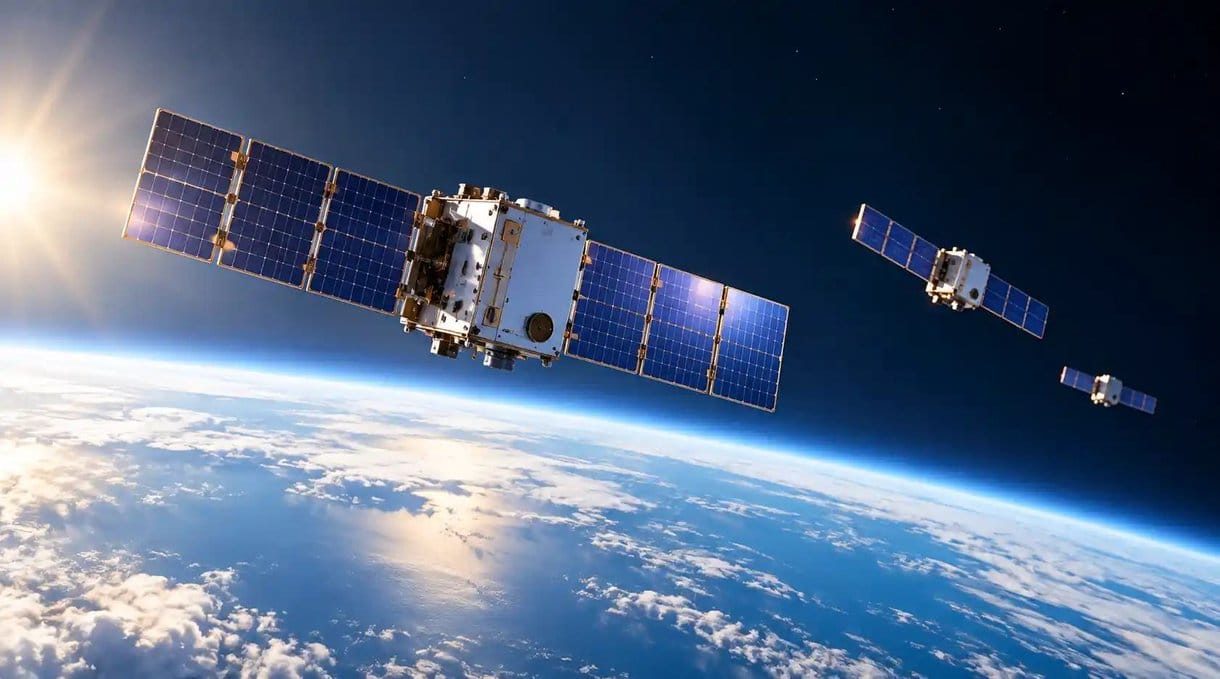
Google is launching a test satellite into space. On board are Google’s own AI chips, known as TPUs.
The aim is to find out whether they can survive in space. The satellite is being launched by SpaceX and was built in collaboration with the company Planet. The launch comes just a few days after Google announced the news on 24 September.
The project is called Suncatcher. In low Earth orbit, there is almost constant sunlight. Solar panels can therefore generate up to eight times more power than on Earth. In the long term, Google wants many satellites to work together on large-scale AI tasks.
There are three major challenges. The first is the launch itself. The rocket shakes violently, and the chips can be subjected to up to 100 times the force of gravity. Google has put the hardware through its paces on the ground, and it held up. The second is radiation from the Sun and space, which can cause faults in electronics. Google’s chips withstood a radiation dose greater than what they would receive over five years in space. The third is heat. In a vacuum, there is no air to provide cooling. Google plans to use heat pipes and radiators, but has only tested them in a chamber on Earth.
It is not until 2027 that Google will launch two satellites designed to communicate via lasers. Until then, this is a test to see whether the chips will survive at all. All figures come from Google itself.
Why is this important?
The important thing is not the satellite. It is that Google is looking for power sources beyond our planet. This says something about the pressure the AI industry is under when it comes to energy. When one of the world’s richest companies starts looking to space, electricity has become a real bottleneck.
I don’t believe we’ll see data centres in orbit within the next few years. The article mentions neither the cost, nor the size, nor a date for when actual AI tasks are to be run up there. It’s an experiment with chips, not a data centre. I’d view it as a research project with significant PR value.
But energy consumption isn’t just Google’s problem. Ultimately, it will be reflected in the prices of the AI tools you use. So keep an eye on who solves the power problem most cost-effectively, as that will determine who can offer powerful AI at a reasonable price.
 Travis Beals
AI is becoming part of the infrastructure, and young people are losing their way into the profession
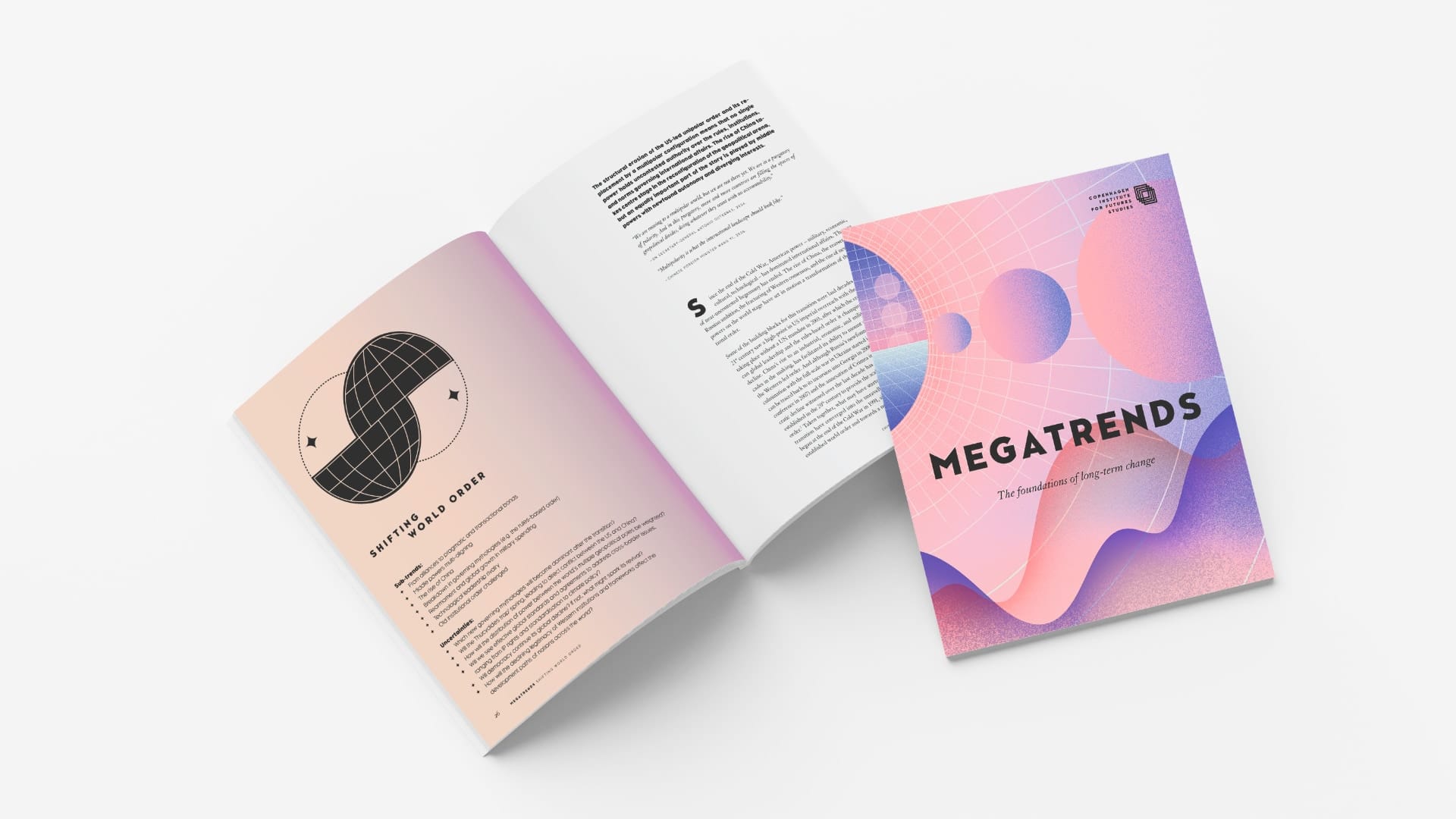
The Institute for Future Studies believes that AI is evolving from being a tool you switch on to being part of the infrastructure on which everything else runs.
This is stated in the institute’s new report on the world’s eleven biggest megatrends, which was published on 24 September. AI is just one of the chapters, but it is the most relevant to you.
The report shows that AI has already made its mark in the white-collar sector and is taking over specific tasks. It mentions, amongst other things, law, finance, office work and sales. However, progress is not uniform. AI is rapidly becoming proficient at tasks where it is easy to check whether the answer is correct. It is still less capable when the task requires judgement, unclear objectives or the complexities of the real world.
Consequently, the bottleneck is shifting rather than disappearing. As machines are able to carry out more work, the ability to monitor and approve what they do becomes the limiting factor. It is people who must vouch for the outcome, and this cannot be done any faster simply by ramping up the use of AI.
The report therefore predicts greater demand for people who can use AI, check it and challenge it. It distinguishes between ‘AI understanding’ – that is, knowing how AI works and where its limits lie – and ‘AI fluency’ – that is, being able to use and challenge it consciously.
There is also a downside. Some jobs at risk from AI are hiring fewer recent graduates. The report refers to this as the ‘missing junior tier’. If AI takes over the simple tasks, young people lose the opportunity to learn the trade as they usually would. The report also mentions the risk that we will lose skills if we leave too much of the thinking to the machine.
Why is this important?
Most of what you hear about AI is about how much faster you can produce output. The report highlights the opposite problem. It is not output that is in short supply, but those who dare to sign off on it. The more AI does for you, the more valuable it is for you to be able to judge for yourself whether it is good.
For a freelancer, the message is clear. Your value lies in your judgement and your responsibility to the client. If you pass on AI-generated text without reading it properly, you’ve sold the one thing that was actually worth paying for.
This doesn’t just apply to young people. It applies to anyone who skips the tedious groundwork because AI can do it for them. You won’t become good at assessing a text if you’ve never written a bad one yourself. Use AI to work faster, but don’t use it to avoid learning the craft.
YouTube Music gets an AI chatbot and a weekly podcast guide

YouTube is now letting AI decide what you should listen to. This is happening on YouTube Music, and it’s more than just a search function.
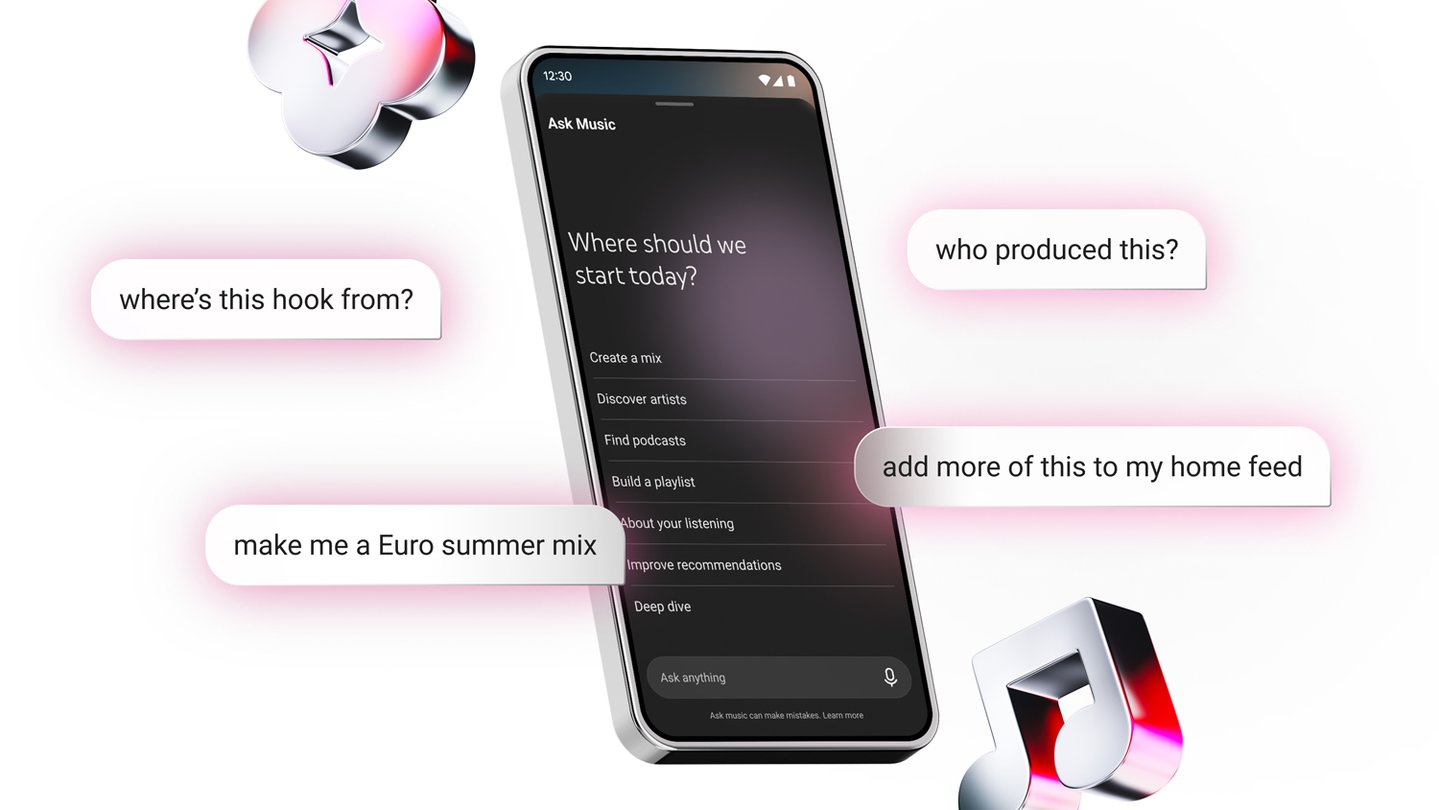
The first new feature is called Ask Music. You type into the app as you would to a person, and it replies. It knows both podcasts and over 300 million songs. You can ask it to build your playlist or tell you about an artist.
The second new feature is called ‘your podcast lineup’. Every week, you’ll receive a short, spoken guide. An AI voice tells you which podcasts you should listen to and why you’ll like them. Then the suggested episodes start playing. You don’t need to look at the screen.
YouTube backs this up with figures. In July 2026, users discovered a new artist over 450 million times. Now the company wants to make it even easier. Both features are coming “soon” to YouTube Music and Premium worldwide. No specific date has been given.
Why is this important?
This isn’t about music. It’s about who decides what you listen to. With the podcast guide, you don’t just hear a suggestion. A voice tells you why you’re going to like it.
It’s a recommendation designed to persuade you. And because it’s ‘eyes-optional’, you aren’t presented with anything you can look at and choose from. You just listen.
The article doesn’t explain how the suggestions are selected.
Nor does it say whether YouTube can prioritise certain podcasts or artists. These are the questions I’d ask before letting an AI voice dictate my weekly listening schedule.
I can see two consequences. As a listener, it’ll be easy to end up listening to the same things that everyone else is recommended. As a content creator, it’ll be harder to be discovered if the AI doesn’t mention you.
 T. Jay Fowler
New study: AI chatbots provide more consistent answers than Google

AI chatbots provide a narrower range of information than a standard Google search. This is shown by a new study led by the Department of Computer Science at the University of Copenhagen.
The researchers tested 27 language models from organisations including OpenAI, Meta, Google and Alibaba. They asked questions on 155 topics, ranging from nuclear weapons and marriage to Marine Le Pen and K-pop. Each topic was asked about in 200 different ways, based on questions from real users. This yielded around 70 million individual statements, which were compared with Google’s results.
All the models provided more consistent answers than Google. Even the most varied model, GPT-5, provided at least 18.7 per cent less varied information. The smallest models were more varied than the largest. The newest models were more varied than the older ones.
The explanation is that the models learn the most recurring patterns and filter out the anomalies. If future models are trained to a greater extent on text written by other AI models, the variation may diminish with each generation. This is what the researchers call a ‘knowledge collapse’.
Professor Isabelle Augenstein emphasises that this collapse is not yet underway. However, the mechanism that could trigger it is present. The researchers urge us to continue seeking out more sources. They call on AI developers to measure the breadth of knowledge their models provide access to.
Why is this important?
The problem is not that the chatbot gets things wrong. The problem is that it gives more or less the same answer to everyone. If you and your competitors ask the same question, you’ll get the same examples, the same angles and the same phrasing. So we end up writing the same text.
For anyone who makes a living from communication, that is the real risk. You’re only worth reading if you have an angle that others don’t have. I don’t think the solution is to ditch AI. It’s to think for yourself first and then use the chatbot as a sparring partner, not as the definitive answer. And to ask it directly for what it would otherwise omit: ‘Give me the strongest counter-argument.’ Anyone who simply takes the first answer will get the same answer as everyone else.
The abundance of the future, and who controls it
Elon Musk was recently interviewed for 85 minutes by Zanny Minton Beddoes, editor-in-chief of The Economist. He paints a picture of a world where AI and humanoid robots will change everything within ten years.
Musk believes that, in about five years’ time, AI could be smarter than the whole of humanity put together. First, it will take over desk-based work; later, physical labour via robots. According to him, the result will be enormous abundance. Work will become something we do for pleasure, like gardening, rather than because we have to. Governments will be able to pay money directly to citizens, and the vast array of AI-produced goods will keep prices down.
He acknowledges that the road ahead may be a difficult one. Job losses and misuse are real risks. He therefore suggests that the major AI companies – including competitors – should be allowed to regularly test each other’s latest models and alert governments if any of them ignore dangerous capabilities. In the long term, China should be on board. He also believes that China could win the AI race due to the country’s strength in energy, robotics and manufacturing.
The interview is at least as much about power. Musk admits that his control over Starlink in Ukraine gives him geopolitical influence. He says he “got a bit too involved” in American politics, but still defends his support for Trump. The sharpest exchange concerns Europe. Musk supports right-wing and far-right movements because he wants to defend ordinary people, secure borders and ensure responsible public spending. Beddoes believes he is exaggerating the problems and spreading fear of immigrants. Musk denies being racist, but predicts that cultural conflicts could lead to civil war in the UK. Beddoes strongly rejects this.
Why is this important?
Elon Musk is selling a future where technology solves almost everything. At the same time, he himself is one of the few people who owns the platform, the rockets, the satellites and the AI models. That is the real tension in the interview. The question is not only whether his predictions will come true. It is also how much power it is healthy to concentrate in the hands of one man who believes he is right.
Thank you for reading!
I look forward to sharing more exciting AI news with you in next week’s newsletter. Do you have any thoughts, questions or just fancy sharing your opinion? Please do get in touch – I love hearing from my readers and always reply personally.
Do you know anyone else who’s curious about the possibilities of AI? Please feel free to share the newsletter with them– together we’ll learn more! 🤗
See you on Tuesday!

Kind regards,
René Hjetting