Google’s biggest investment in Europe hits a brick wall in Finland
Finland has put Google’s major AI construction project on hold. The reason is that Google cleared a forest without first carrying out the environmental assessment required by law.


On 2 February 2025, Andrej Karpathy posted on X. He co-founded OpenAI and has served as Head of AI at Tesla. So he knows how to code.
Yet he described a new way of working, in which he almost forgot that the code even existed. He said what he wanted. The AI wrote the code. If something went wrong, he entered the error message and asked for a correction. He called it ‘vibe coding’.
The post was seen by millions. That same year, Collins Dictionary named ‘vibe coding’ its Word of the Year.
The interesting thing is what this means for you and me. When one of the world’s most skilled programmers stops writing the code himself, the code is no longer the bottleneck. It’s the ability to explain exactly what you want.
You can do that. It’s the same thing you do when you write a good brief.
I hope you enjoy reading the newsletter!
/René 🤗
Here’s today’s menu:
- Google’s biggest investment in Europe hits a brick wall in Finland
- Half of daily AI users feel exhausted by the tool
- The battle over AI agents is about where your work is based
- New initiative to help small factories identify their bottlenecks

Google’s biggest investment in Europe hits a brick wall in Finland
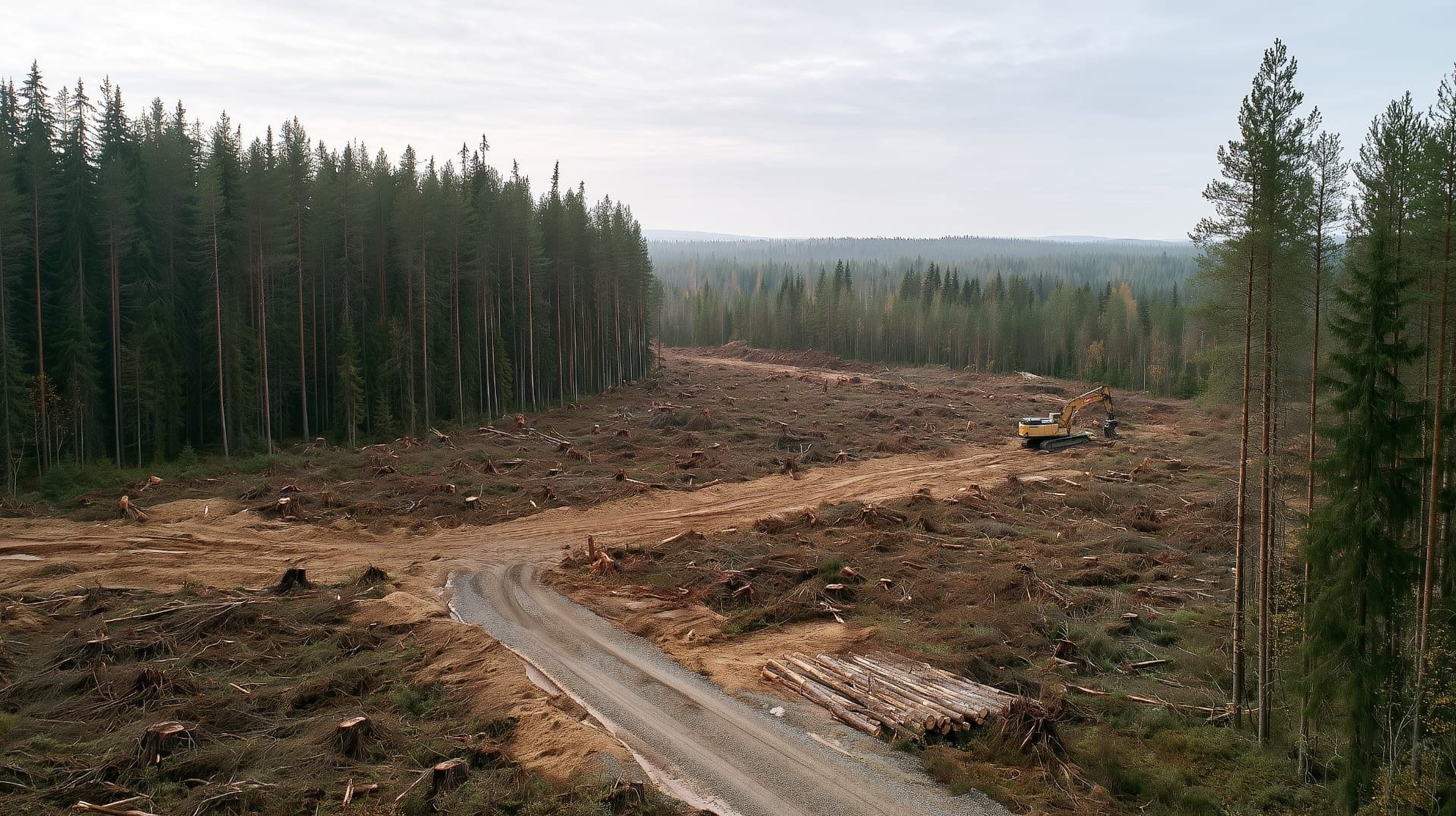
Google’s major AI construction project has been put on hold. The reason is that Google cleared a forest without first carrying out the environmental impact assessment required by law.
This concerns two planned data centres in Muhos and Kajaani in northern Finland. In September, Google pledged to invest 13 billion euros in Finland over two years. That is around 97 billion kroner and the company’s largest ever investment in Europe.
Now the Finnish supervisory authority LVV has intervened. The authority is demanding that a company building on Google’s behalf halt all work that significantly alters the natural environment. The halt must take effect immediately and no later than 23 October. According to the authority, trees have been felled, topsoil removed, roads and storage areas constructed, and ditches altered. The Finnish Nature Conservation Association states that more than 300 hectares have been cleared. This is equivalent to just over 400 football pitches. According to the association, there were also areas of natural habitat that should have been preserved.
Google must provide an explanation by 14 October at the latest. Otherwise, the authority may initiate enforcement proceedings. Google acknowledges that the company has not lived up to its own standards. It promises to follow the authority’s instructions and plant trees across 130 hectares. Finland’s Minister for the Environment says that the projects are now likely to be delayed, and that all companies in Finland must comply with the law.
Why is this important?
We talk about AI as if it were happening in the cloud. It isn’t. It takes place in concrete halls that require electricity, water and space. In this case, it also required 300 hectares of Finnish forest before anyone had checked whether it was permissible.
The most telling aspect is the sequence of events. Google began clearing the forest before the environmental impact assessment had been carried out. When you’re making an investment of 13 billion euros, you apparently reckon that the regulations can be dealt with later. Finland is rejecting that mindset, and that’s a good thing. The law must apply even to the biggest customer.
The Nordic region attracts data centres with green electricity and a cold climate. The Finnish case shows that ‘green AI’ doesn’t just happen by itself. Someone has to demand it.
 Pascale Davies

Half of daily AI users feel exhausted by the tool

Half of the people who use AI every day at work feel exhausted by it. This is shown by a new Chinese study of 480 daily AI users.
The problem isn’t the technology itself. It’s the extra work it creates. The answers look impressive at first glance. But when you read them properly, there are errors. Or perhaps you didn’t get an answer to what you asked. Then you have to fact-check. Or rephrase your question. And again. The researchers call it AI burnout.
Søren Hauberg, a professor at DTU, is familiar with this scenario. He compares AI responses to having “a very vague philosopher at the table”. Big words, a persuasive tone, few concrete answers.
This isn’t the first time researchers have observed this. A 2024 study from Aarhus University surveyed nearly 300 AI workers in India. Many were frustrated by how long it took to make sense of the chatbot’s replies. Some, however, were motivated to improve their prompting skills.
Two further factors are taking their toll on people. The tools are constantly changing, so many feel they are lagging behind. And several feel that, in reality, they are training the machine that is set to take over their jobs.
Hauberg also sees a specific problem among his students. They ask the AI for a first draft to get started. But the text is so well-written that they don’t feel like continuing in their own words. Instead of getting things moving, it becomes quicksand.
His advice is simple: if a tool is causing you stress, drop it and find another way. Employers also have a responsibility, but the regulations cannot keep pace with the technology. So for now, you’ll have to look after yourself.
Why is this important?
There’s a bill that nobody sends. When AI companies promise that you’ll save time, they only count the seconds it takes to get an answer. Not the minutes you spend checking it. Or asking again. This study puts a figure on that cost, and it’s about time.
Far too many people have been told that they simply need to use AI more. Not better. More. The result is people sitting there negotiating with a chatbot that sounds clever but doesn’t provide answers.
The advice to look after yourself is right, but it’s not enough. It places the entire responsibility on the individual. If a workplace rolls out AI, it must also work out whether it actually saves time, once the time spent on checking has been factored in.
Otherwise, you’re simply shifting the work from the task itself to the checking process and calling it efficiency.
And I fully understand the fear of digging one’s own grave. But it’s pointing in the wrong direction. The person in the weakest position isn’t the one using AI. It’s the one who has stopped writing the first draft themselves.
The battle over AI agents is about where your work is based
Google has turned Gemini into a digital colleague. Until now, you’ve been able to ask Gemini questions. Now you can give it a task, and it will carry it out itself.
Google unveiled the new version at a conference on Thursday. The idea is that you give Gemini a goal rather than step-by-step instructions. Gemini draws up a plan itself, breaks the task down and assigns assistant agents to tackle the individual parts.
It works within the programmes that businesses already use: Google Workspace, Microsoft 365, Slack, Jira and a range of databases.
The most unusual feature is that Gemini is given its own work account with its own email address. You can email it, tag it or add it to a group chat just like a colleague. It knows who is on which team and who needs to approve what. Everything it does is logged under its own name.
Gemini selects the AI model best suited to the task itself. However, you can also choose a different one, and the first option is Claude from Anthropic. In other words, a competitor’s model, integrated into Google’s own product.
Google is starting with businesses and holding off on general users for now. The starting point is strong. Gemini has over a billion monthly users, and nearly nine out of ten of the US’s 100 largest companies are already using Gemini Enterprise. Meanwhile, Meta and OpenAI are building their own agents. The race is no longer about who gives the best answers. It’s about who gets the job done.
Why is this important?
The real news isn’t the agent. It’s the email address.
When an AI gets its own account, its own place in the organisation and its own name in the log, it’s no longer a tool you use.
It’s a colleague you’ve hired. And so the first question isn’t what it can do. It becomes who takes the blame when it sends the wrong email to the wrong customer. Very few companies have an answer to that question.
The second detail is that Google lets you choose Claude. That’s an admission. The model is becoming a drop-down menu. What Google is competing for is the place where your work lives: your email, your calendar, your documents.
This makes your choice of AI tool simpler than the hype makes it sound. Don’t go chasing the smartest model. Look at where your files and emails are stored. That’s where the agent will be at its strongest.
 Sarah Perez
New initiative to help small factories identify their bottlenecks
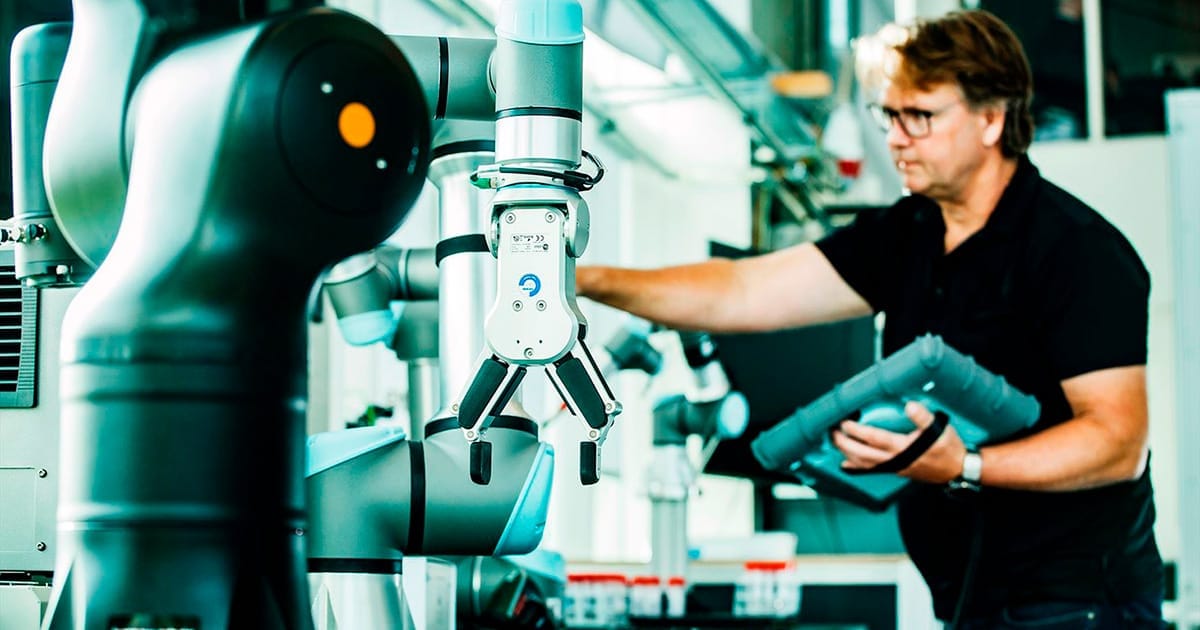
Small and medium-sized manufacturing companies across Denmark can now receive free assistance to find out whether AI and robots can eliminate their bottlenecks.
The initiative is backed by Erhvervshus Fyn, the Danish Technological Institute, MADE, Odense Robotics and the South Danish EU Office. The EU is covering a large part of the cost.
The first step is free of charge. Independent specialists will visit the factory and review the workflows together with management. Afterwards, the company will receive a report with specific recommendations and a prioritised list of what to tackle first. Advice on financing is also free of charge.
If you wish to proceed, you can test your own process at the Danish Technological Institute’s robotics laboratory in Odense. Here, they trial the setup using the company’s own workpieces before any money is spent on equipment. The EU covers over half the cost.
The most interesting aspect is what generative AI does for the robots. Previously, a robot had to be programmed by a specialist. Now, employees are increasingly able to instruct it directly. A consultant from the Danish Technological Institute puts it succinctly: “The robot of the future doesn’t need to be programmed; it needs to be instructed.”
This means that automation is no longer just for large companies with high-volume production runs. Companies with many product SKUs and small batch sizes can also get involved. You don’t need to have a ready-made solution. It’s enough to know your bottleneck.
Why is this important?
Take note of what is actually holding companies back. It’s not the technology. It’s a lack of overview and time. MADE has visited over 170 Danish factories and sees the same thing time and time again: the potential is there, but nobody knows where to start.
It’s exactly the same problem I see in offices. People buy AI licences and wait for something to happen. It rarely does. What works is to start with the task that’s stealing time every week, and only then find the right tool. Automation initiatives get it right by starting out on the shop floor, not in a showroom.
And then there’s the shift from programming to instructing. It’s the same trend that reached the desk when we started talking to AI in everyday Danish. Now it’s reaching the factory floor. That’s bigger news than the initiative itself.
Thank you for reading!
I look forward to sharing more exciting AI news with you in next week’s newsletter. Do you have any thoughts, questions or just fancy sharing your opinion? Please do get in touch – I love hearing from my readers and always reply personally.
Do you know anyone else who’s curious about the possibilities of AI? Please feel free to share the newsletter with them– together we’ll learn more! 🤗
See you on Tuesday!

Kind regards,
René Hjetting